

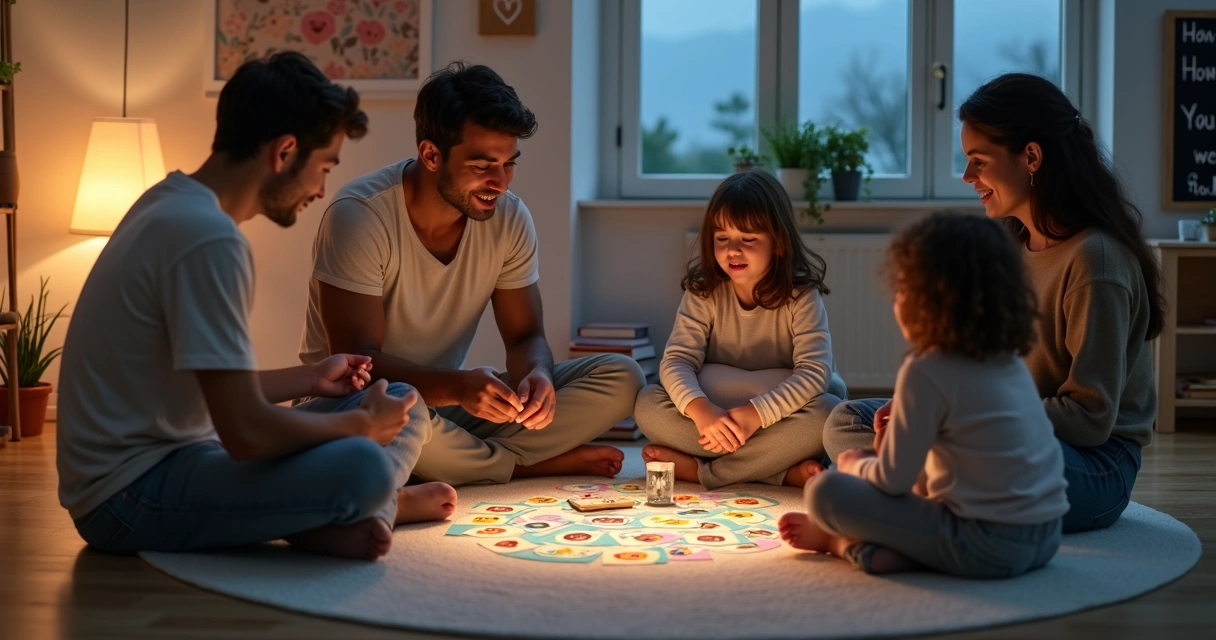
We often think family change starts with rules, schedules, or better communication tips. In our experience, it starts one layer deeper. It starts with emotional literacy. When a child can say, “I am hurt,” instead of screaming, and when an adult can admit, “I am tense, not angry at you,” the whole home begins to shift.
Emotional literacy at home means learning to notice, name, express, and regulate feelings in daily family life.
This sounds simple. It is not always easy. Many of us grew up in homes where emotions were judged, ignored, or feared. So we repeat what we learned, even when we want a different atmosphere. A parent asks about homework, a child hears criticism, a sibling reacts, and dinner becomes a conflict. It happens fast. Very fast.
What is unnamed often becomes noise.
We have seen that families do not need perfect language. They need repeated practice. A meta-analysis of 24 empirical studies on emotion-focused parenting practices found positive links between modeling emotions, responsive reactions, and instructive talk, and children’s emotion knowledge, expression, and regulation. The effects were modest, which tells us something honest and helpful: small acts matter when they happen again and again.
Why home is where emotional learning takes root
Home is where many emotional habits are formed. It is where children first learn what happens to sadness, frustration, joy, shame, and fear. Do those feelings get mocked? Silenced? Punished? Welcomed with limits and care?
Adults learn there too. We all do. A family is not only a place of affection. It is also a field of emotional transmission. Tone, pauses, glances, tension in the body, all of it teaches.
Children learn emotions less from speeches and more from what we model under pressure.
That is why emotional literacy is not a decorative skill. It shapes trust, respect, and conflict recovery. It helps family members stop treating feelings as threats and start seeing them as signals.
Signs a family needs emotional literacy tools
Some homes look calm on the outside but carry silent strain. Others are loud, reactive, and exhausting. In both cases, weak emotional language may be part of the problem. We usually notice a need for support when families face patterns like these:
Frequent yelling over small issues.
Children who shut down when asked what they feel.
Adults who confuse tiredness, fear, and anger.
Siblings who move from play to aggression without warning.
Apologies that end conflict for a moment but never heal it.
These patterns do not mean a family is failing. They usually mean the emotional vocabulary is too small for the pressure the family is carrying.
Practical tools that change the emotional climate
Real transformation rarely comes from one deep talk. It grows through ordinary moments. The ride to school. The kitchen after work. The minutes before bed. Those are the places where emotional literacy becomes real.
Build a shared feeling vocabulary
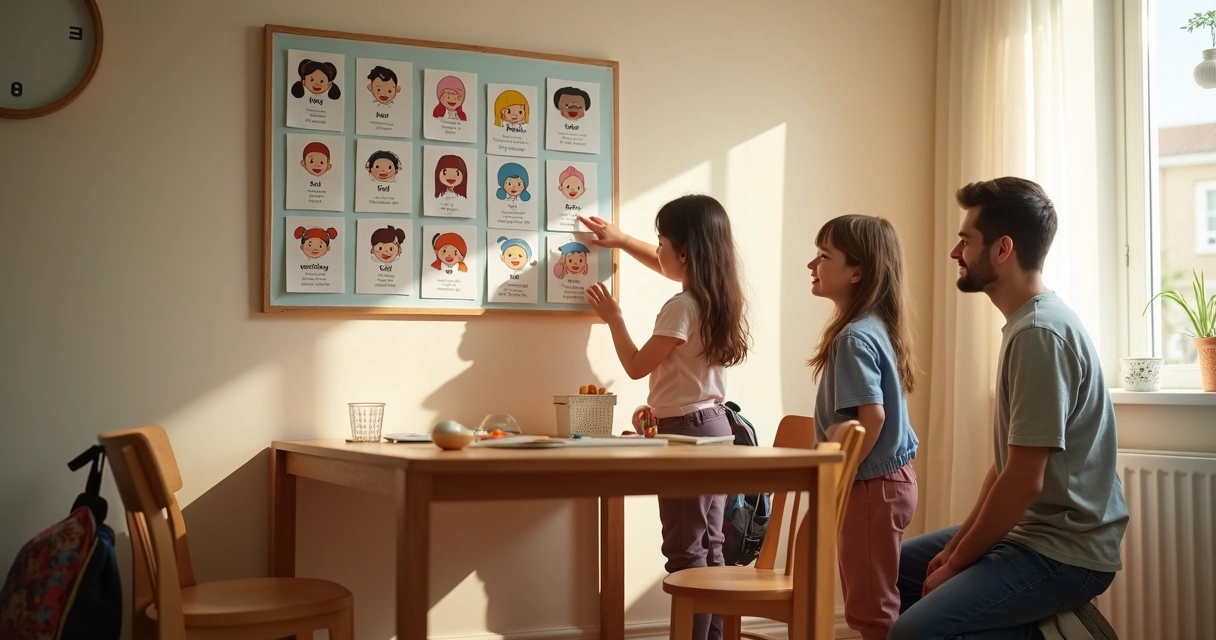
Many families use only a few words: fine, upset, angry, good. We think that is where progress can begin. Expand the language. Add words like disappointed, restless, left out, embarrassed, relieved, worried, proud, and confused.
You can try a simple habit. At one moment each day, each person names one feeling and one reason. Keep it short. No fixing. No debate. Just naming.
The more precise the feeling word, the less likely it is to come out as blame or chaos.
Use reflective listening during conflict
When emotions rise, advice usually fails. Reflection works better. We repeat the feeling and need we think we heard. For example: “You are frustrated because your turn ended too soon.” Or, “You felt ignored when we kept talking.”
This does not mean we agree with every behavior. It means we show that inner experience can be heard before limits are set. That softens defensiveness and makes correction more effective.
Create a pause ritual
Some families wait until conflict explodes. A pause ritual interrupts that cycle earlier. It can be as simple as three slow breaths, a glass of water, or two minutes apart before speaking again.
We suggest making the pause visible and normal, not dramatic. It is not exile. It is regulation.
Choose one signal phrase, such as “We need a pause.”
Agree on what each person does during the pause.
Return with one sentence about what each person felt.
When repeated with steadiness, this tool teaches that strong emotion does not have to lead to harm.
Read and role-play emotions with children
Stories help children see feelings with some distance and safety. Role-play helps them rehearse responses before real stress arrives. An OECD-sponsored report on early learning and child well-being in the United States found that children from homes with many books or frequent parent-child emotion role-play and discussion scored higher on social-emotional measures and showed fewer disruptive behaviors.
We like this finding because it is practical. You do not need a complex program. You need repetition, presence, and language woven into home life.
What parents and caregivers often get wrong
We say this with care. Most adults are not trying to dismiss emotions. They are trying to restore order fast. But speed can erase understanding. Common mistakes include:
Asking “Why did you do that?” when the child is too flooded to think.
Saying “Calm down” without giving any path to calm.
Turning every feeling into a lesson before the feeling is felt.
Confusing boundaries with emotional coldness.
A few years ago, we heard a parent tell a crying child, “You are fine.” The child stopped crying, but his shoulders stayed tense. That moment stays with us. Silence is not the same as regulation. Compliance is not the same as trust.
Calm cannot be forced. It can be taught.
How emotional literacy transforms family bonds
When families practice emotional literacy, they usually do not become conflict-free. They become more honest, more repair-oriented, and less driven by emotional confusion. People recover faster. Children feel safer saying what is true. Adults become less reactive because they can separate feeling from action.
This kind of home gives a child something deep: the sense that emotions can be known without becoming dangerous. It also gives adults relief. We no longer have to carry every hard feeling as failure. We can meet it, name it, and guide it.
That is how families change. Not through dramatic promises, but through simple practices lived with consistency. One moment of naming. One pause before harm. One honest reflection after a hard day. Over time, these moments shape a different household culture.
Conclusion
We believe emotional literacy at home is one of the clearest ways to transform family life from the inside out. It teaches children how to understand themselves and teaches adults how to lead without emotional blindness. More than that, it restores dignity to daily relationships. A home grows stronger when feelings are not denied, feared, or dumped on others, but recognized, spoken, and guided with care.

Frequently asked questions
What is emotional literacy at home?
It is the family practice of noticing, naming, expressing, and regulating emotions in healthy ways. It includes how we speak, listen, set limits, and repair after conflict.
How can families build emotional literacy?
Families can build it through repeated daily habits, such as naming feelings, listening without rushing to correct, using pause rituals, reading stories about emotions, and talking about what happened after tense moments.
Why is emotional literacy important for kids?
It helps children understand their inner states, manage frustration, build better relationships, and ask for help with more clarity. It also lowers the chance that feelings will come out only through aggression, withdrawal, or defiance.
What are simple emotional literacy tools?
Simple tools include a feelings chart, daily emotion check-ins, reflective listening, breathing pauses, role-play, and bedtime talks about one hard moment and one good moment from the day.
How to teach emotions to young children?
We teach young children best through simple words, repetition, facial cues, stories, and play. We can name feelings in real time, connect them to body signals, and show safe ways to express them, such as asking for space, using words, or taking slow breaths.