
We often hear people say they want to find clarity about their choices, purpose, or next steps. But what if the missing link isn’t about finding the right tool or technique, but about understanding our own values in a way that cuts through noise and hesitation? From our experience, the foundation of true clarity comes from what we call “human value mapping.” It is a practical method for uncovering, refining, and applying the values that quietly shape every decision we make.
To see ourselves clearly, we first have to see what we value.
Why do values feel hidden?
So many of us get caught up in roles, routines, and expectations. We try to meet standards set by others: family, work, friends, or broader society. Over time, it gets harder to distinguish what truly matters to us from what we have simply absorbed or learned to accept.
We often find clients and colleagues expressing confusion or frustration:
- They say “I don’t know why I feel stuck,” even though their life looks successful from outside.
- They chase goals, but the achievement never quite feels satisfying.
- They feel torn between choices, unable to decide without second-guessing themselves.
This confusion is rarely about a lack of ambition. Instead, it’s because their true values are buried beneath layers of expectations and unexamined beliefs.
When we lose sight of our values, we lose access to the deepest kind of clarity and motivation.
What is human value mapping?
We define human value mapping as a systematic process to surface, organize, and embody our values. Instead of treating values as abstract concepts, we treat them as living coordinates that organize our thoughts, feelings, and actions.
This map is unique for every individual. It is a living picture of what truly matters to us, not what we should value, but what we actually do.
How does value mapping work?
The method has three simple, interlocking phases. Each is important, and the process tends to move back and forth, not just in a straight line.
- Surfacing values
This is about getting deeply honest. We look at moments, big or small, from our past that brought us either great pride or deep regret. In our experience, these moments often reveal the underlying values that move us.
- When did we feel most alive? Most at peace? Most ourselves?
- When did we feel out of alignment, resentful, or lost?
We list the words and feelings that come up. Often they are simple: honesty, family, growth, kindness, autonomy, learning, service.
- Organizing and prioritizing values
With our initial values surfaced, we often find patterns. Some values are guiding stars, while others are less central but still present. We find that using clusters or “constellations” is helpful here, grouping similar values together and noticing which ones truly sit at the center of our lives.
The core step is asking: If I had to choose, which values would I never give up, even under pressure?
- Embodying and applying values
This is where the map becomes real. We look at how our current actions, relationships, and decisions line up with our core values. Where there is a big gap, we ask: Why? Is there fear, old conditioning, or external pressure at play?
Bringing our actions into alignment with our values creates a felt sense of inner clarity. It gives us a compass we can trust, even when external circumstances are uncertain.
What makes mapping different from just thinking about values?
We’ve seen many people write out values as an exercise and then forget about them. Human value mapping runs deeper. The criteria that set it apart:
- It emphasizes felt experience over intellectual ideals. Values that never show up in life are usually aspirational, not actual.
- It creates a living map that can be revised as we change and grow.
- It is action-oriented, regular check-ins with the map are part of the practice.
Clarity is not a state. It is a practice of returning, again and again, to what matters most.
The role of intention and honesty
Whenever we map values, the process only works if we are honest with ourselves. Sometimes, we discover values that surprise us, or that challenge the stories we hold about who we are.
The hardest part of mapping is often facing the gap between what we wish we valued and what we actually live.
Yet, that honesty is also what leads to liberation. By seeing our inner reality clearly, both light and shadow, we gain the power to change, accept, or reaffirm our direction.

Making your value map practical
After creating a value map, the biggest question is: How do we use it in our daily life?
We encourage these simple practices:
- Place your value map somewhere you see it regularly, a physical card, a note on your phone, a reminder on your calendar.
- Before major decisions, pause and glance at your top values. Ask, “What choice here brings me closer to these?”
- When you feel unclear or unsettled, look for which core value might be left out or compromised in your life at the moment.
Over time, value mapping helps new habits grow naturally. Our choices start to reflect who we want to be, not just what is expected of us.
Value mapping as a path to inner clarity
We see again and again: mapping our values clears mental fog and eases emotional stress. Why? Because confusion is usually not about circumstances, it is about values being hidden, conflicted, or suppressed. When we bring them into the light, big shifts happen.
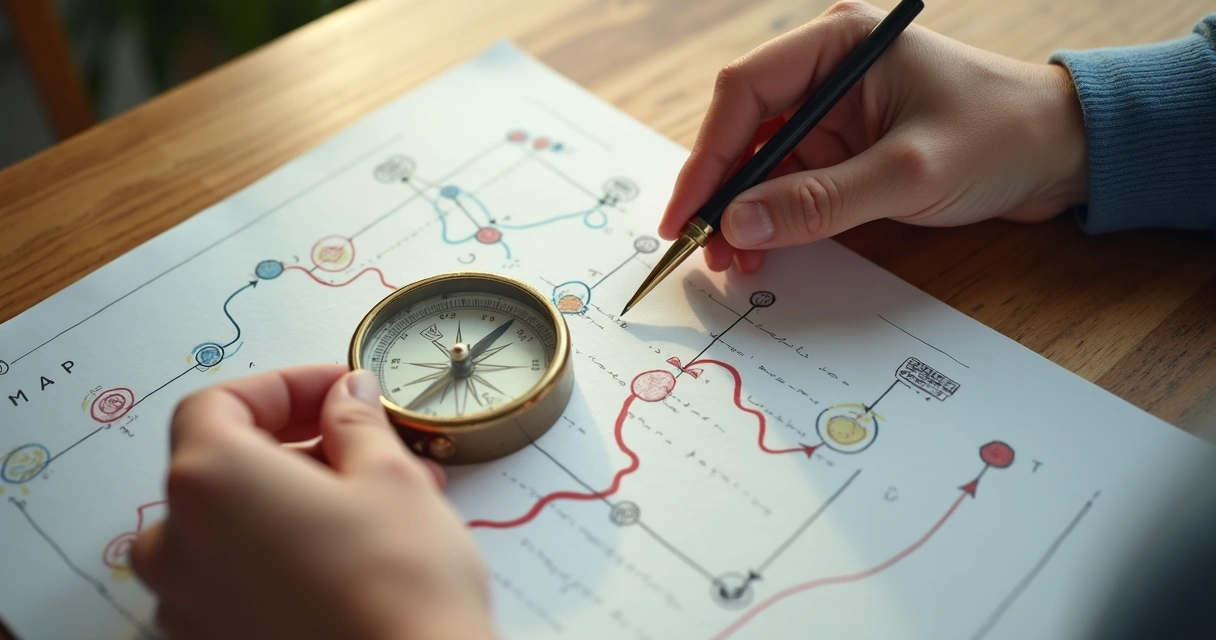
We have watched people clarify their careers, mend relationships, and approach new projects with fresh purpose, all because their choices finally lined up with their true inner map.
Clarity grows when we know our values and begin to live them.
It is all about conscious living
Value mapping is not about being perfect or having all the answers. In our perspective, it is about a different way of being, living with intention, presence, and honesty about what moves us.
We believe this is the path to a more meaningful life and a more positive impact on the world around us.
Conclusion
Finding clarity is not a final destination but a process of alignment. Through human value mapping, we gain a practical way to see and shape our inner world. This leads us to more motivated choices, greater peace, and a sense of direction that stands strong even when things change. The map is never finished. That is the beauty of it, as we grow, new insights arise.
Frequently asked questions
What is human value mapping?
Human value mapping is a process of identifying, organizing, and embodying the values that guide our lives, helping us make more authentic choices. It turns abstract ideas into a clear, visual, and practical reference for decision-making and self-understanding.
How does value mapping bring clarity?
By surfacing and organizing values, we create a compass that guides choices and resolves confusion. When we understand our top values, we can align actions and decisions around what matters most, reducing inner conflict and doubt.
Is human value mapping worth trying?
Yes. We have seen that value mapping helps people gain insight, peace of mind, and motivation. It is a simple, flexible process that can adapt to different personalities and life situations.
How to start with value mapping?
Begin by reflecting on life moments that brought you pride or regret, and note the values connected to those moments. List out key values, group them, and ask which are truly central. Test your choices by seeing whether your actions align with these values in daily life.
Who can benefit from value mapping?
Anyone who wants more clarity, direction, or peace in decision-making can benefit, from students to professionals, leaders to parents. The process is helpful for both personal and shared (team, family) contexts.