

In our experience, when a group appears united but struggles beneath the surface, the root cause often lies in a simple but powerful issue: misaligned intentions. On the outside, all might seem harmonious, but careful observation reveals cracks that impact more than just group spirit—they affect relationships, decisions, and even social outcomes. To understand what derails or nourishes collaboration, we must notice the subtle clues that tell us when intentions do not match words or declared goals.
Why intentions shape group reality
We often hear that actions matter most. In group dynamics, however, the intentions driving those actions are equally telling. When intentions match purpose and words, cooperation flows with surprising ease. When misaligned, things start to unravel, sometimes in ways that only come to light after real damage has already been done.
Intentions are silent, but their results are not.
Recognizing misaligned intentions is not about blaming anyone. It is about noticing the signals before they amplify into conflict or create long-term division. From what we have seen, the healthiest collectives take time to notice not just what people do, but what seems to drive them underneath.
Five clear signs of misaligned intentions
While every group and context is unique, several indicators show up repeatedly when intentions are not in sync within a collective. Here, we discuss the five that we have found most reliable and actionable.
1. Hidden agendas driving key decisions
When group members push for outcomes that quietly serve personal interests over the collective agreement, the consequences often surface as confusion or frustration among others. The group might attempt to decide on a strategy, only to watch discussions stall or circle back due to input that doesn't fit the group’s shared values.
Hidden agendas do not always stem from malice. Sometimes someone fears being left out, or wants to hold on to a sense of control. Yet the result is often a distortion in the group’s direction, causing energy to scatter and goals to fade.
- People bring forward “facts” selectively, omitting key context.
- Meetings end with some members feeling uncertain about the next step—and unsure why.
- The same “blockers” appear again and again, but are never directly addressed.
When these patterns repeat, it is not the spoken plan but the unspoken intention that is shaping outcomes.
2. Growing rumors and indirect communication
We have seen many groups function smoothly for months, until gossip and side conversations become the norm. Instead of direct feedback or honest questions, people begin to share concerns in whispers or quick private texts.

This is a major sign that intentions are not openly shared. When intentions lack alignment, communication slips from open forums to side channels. This usually grows in environments where trust is low and clarity is missing.
Direct speech becomes risky, so indirect talk replaces real dialogue. As a result, misunderstandings multiply, and group cohesion weakens.
3. Emotional tension and “walk on eggshells” atmosphere
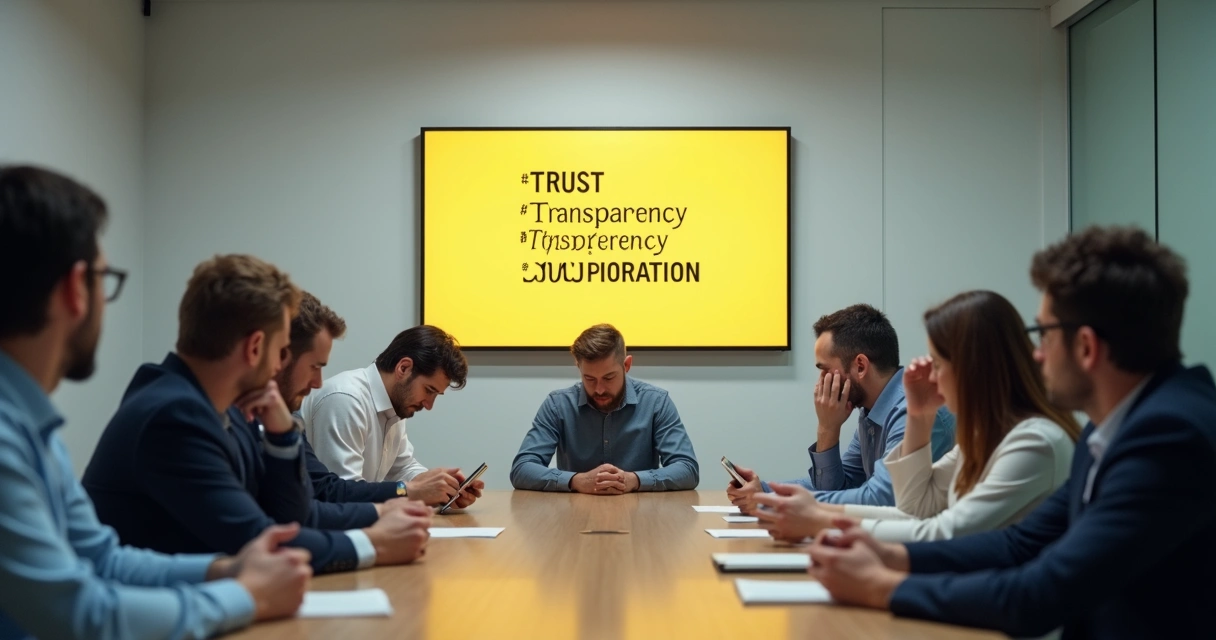
Emotional signals are often more honest than spoken ones. When intentions do not line up, the group atmosphere changes. We have felt it ourselves—meetings with brief answers, tense body language, or a silence that settles heavily in the room.
- Laughter fades or feels forced.
- Different members stop contributing or self-censor regularly.
- The group avoids feedback or meaningful conversation about difficult topics.
This atmosphere tells us that people are no longer comfortable being transparent. The group sense of safety recedes. Agreements become hollow, because the unspoken risk of disagreement is too high to mention.
4. Widening gap between declared values and actual behavior
Another reliable indicator involves the gap between what is said and what is consistently done. The group might agree on values or a mission statement, but behavior starts to drift in small, visible ways.
Imagine a team that claims openness as a core value, yet avoids honest feedback. Or a club that prizes cooperation, but sees individuals working in silos to protect their roles. Over time, these inconsistencies become more obvious.
In our observation, the larger the gap between stated values and daily behavior, the more likely it is that intentions are not shared or transparent. This gap fosters cynicism, as newer members quickly realize that not all intentions are welcome in the open, making real change harder.
5. Low energy and loss of shared motivation
Few things are as telling as the group’s energy. When intentions line up with vision, motivation is high and participation voluntary. When members feel the group is following surface-level plans but not their true purpose, engagement drops rapidly.
- Members withdraw from group activities with vague excuses.
- Enthusiasm that once fueled initiatives begins to look like indifference.
- The group delivers only the minimum, rather than reaching for more.
Some call this “quiet quitting” in a workplace, but it applies beyond professional teams—we have seen it happen in community projects, sports, and even families. The root cause: people lose trust that intentions are truly shared, so they conserve their effort for spaces where it feels safe to be fully invested.
The impact of misaligned intentions
The effects of misaligned intentions ripple outward. They lead to misunderstandings, broken trust, and missed opportunities. As intent drifts apart from action or stated purpose, groups not only fail to reach their shared goals. They may slowly lose their strongest members, who seek greater integrity elsewhere.
Groups move at the speed of their shared intention.
What to do if you spot these signs?
If you notice one of these indicators, it is rarely a single person’s issue. Instead, it is a call for the group to pause and reconnect—not just with the declared goals, but also with why people show up in the first place.
We suggest open forums for honest sharing of motivations. It is better to begin clumsily and learn together, than to let silence grow into distance. Bringing unspoken intentions into light is sometimes awkward, but it transforms the whole environment.
Conclusion
Misaligned intentions rarely announce themselves. Yet their subtle signals are clear when we decide to see. By learning to recognize these indicators—hidden agendas, indirect communication, emotional tension, gaps between words and actions, and fading motivation—we give any group the best chance to reconnect, realign, and thrive.
Alignment is invisible work, but the results shape everything we build together.
Frequently asked questions
What are misaligned intentions in groups?
Misaligned intentions in groups mean that individual goals or motivations differ from the openly stated or agreed-upon purpose of the group, leading to disconnects in trust, behavior, and results. This misalignment can happen consciously or unconsciously, and shows up in the difference between what people say and what they actually aim for.
How can I spot misaligned intentions?
You might notice recurrent hidden agendas, increased gossip or side talk, rising emotional tension, clear gaps between what is said and done, and a noticeable drop in group energy or engagement. Paying attention to these patterns can help you identify when intentions within a group are no longer aligned.
Why do misaligned intentions matter?
When intentions are not aligned, trust erodes, communication weakens, and group outcomes suffer. Misalignment prevents genuine collaboration, leads to misunderstandings, and can eventually fragment the group, wasting both time and possibility.
How to address misaligned intentions?
Start by creating safe environments for direct conversation, encourage open sharing of motives, and clarify both individual and shared goals. Recognizing and discussing unspoken intentions helps groups reconnect and restore truthful collaboration.
Can misaligned intentions harm teamwork?
Yes, misaligned intentions can seriously weaken teamwork by reducing trust, spawning conflict, and lowering motivation. Over time, the group might hit roadblocks or lose valuable contributors, because collective effort depends not just on tasks but also on shared purpose and clear intent.